


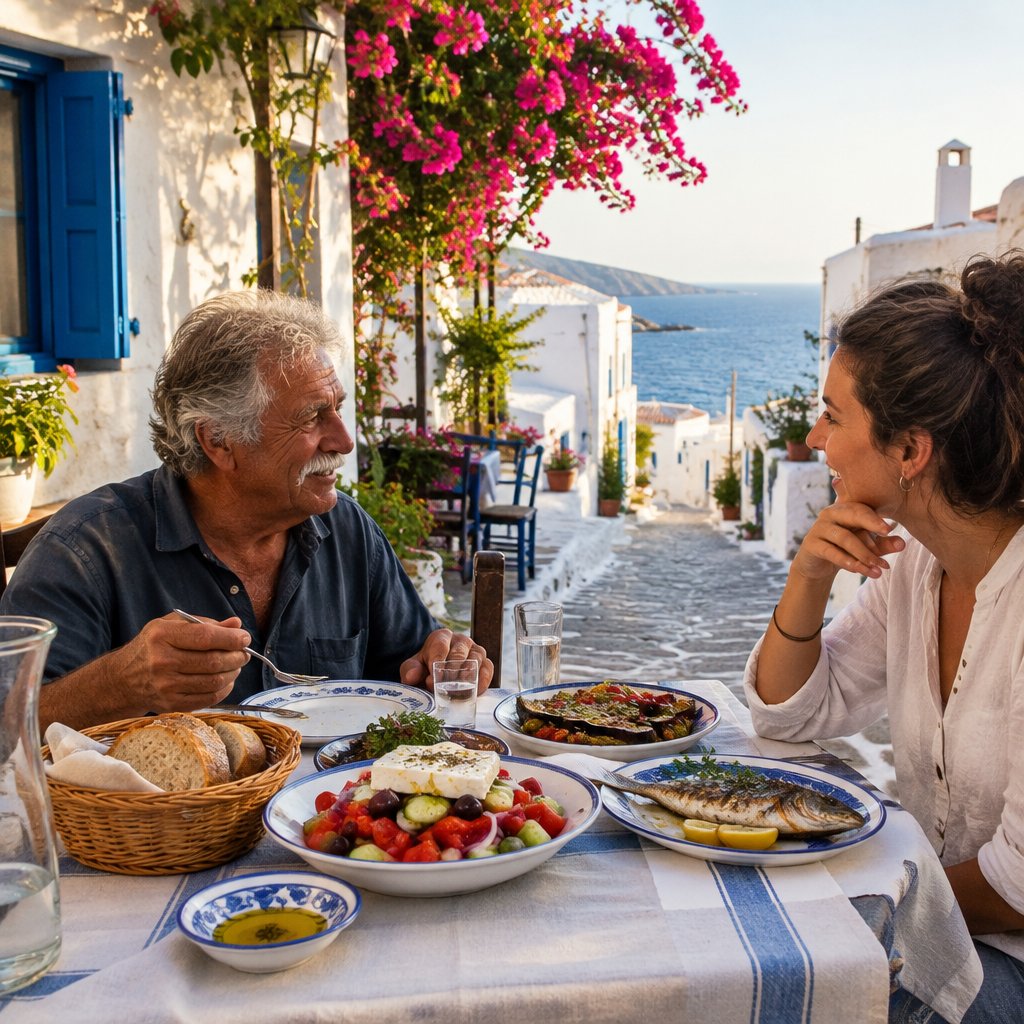

A trip built around your own interests is one of the surest ways to get beyond conventional sightseeing in Greece. The most rewarding way to experience authentic Greek food and village life is to pair a few well-chosen hosted experiences, such as a cooking class, a producer visit and a village meal, with the sights you already want to see. At GreekEscapes.com, we have been building private Greece vacations since 1982, and the trips people remember most tend to weave a long table in a mountain village in between the Acropolis and the beach.
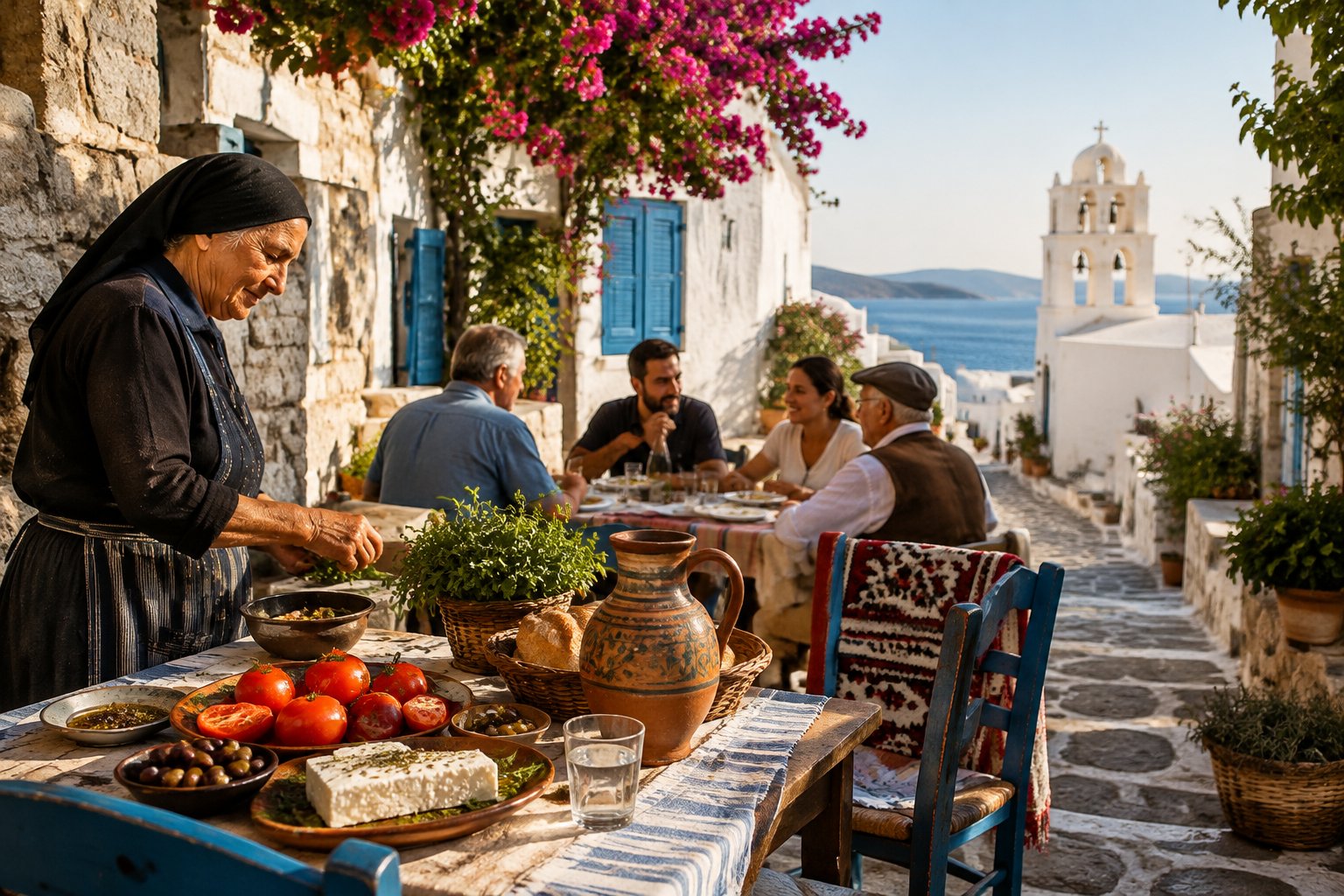
Traditional Greek villages are working communities, with bakeries, coffee shops, olive groves and families who have cooked from the same repertoire for generations. Authentic Greek food experiences give you a way into that daily rhythm: you cook, taste and sit down with the people who grow and prepare what is on the plate.
Greece is bigger than it looks and ferries eat time, so these experiences work best when they are placed on a realistic map. Below, we walk through the food encounters worth seeking out, the regions where they fit, how to take part respectfully, and how to shape it all into one coherent trip.
Three kinds of food experience open the door to local life fastest: market and taverna visits, hands-on cooking classes, and tastings with the producers themselves. Each one puts you at a table or a counter with people who know the ingredients personally, which is where Greek cuisine makes the most sense.
Markets show you what is in season before you ever sit down to eat. Wander past stalls of cheese, olives, honey, wild greens and herbs, taste what vendors offer, and ask what they cook with it.
Then head to a neighborhood taverna and order meze, small plates meant for sharing. Order a few at a time and let the table fill gradually; Greek meals unfold slowly, and the best dishes often come from the daily list rather than the printed menu.
A cooking class is the most direct way to learn how Greek food is built. Good ones begin with shopping or picking ingredients, then move to the kitchen, where you shape pies, stuff vegetables or work with dough, and end by eating together.
Look for small groups led by a host who cooks regional dishes rather than a generic “Greek menu.” Classes in Crete, Corfu and the Peloponnese each teach noticeably different food.
Tastings at the source teach you how to judge quality. With extra virgin olive oil, you learn to notice peppery, grassy or fruity notes, and to see why harvest timing changes the flavor. Cheese-makers and winemakers explain what their region’s animals, soil and climate contribute.
These visits suit travelers who like to ask questions. Plan them for mornings or late afternoons, when producers have time to talk.
Each Greek region ties its food to a different landscape, so the best village experiences come from matching a place to what you most enjoy eating and doing. The examples below link a regional specialty to something you can actually do, along with the practical points that shape whether it fits your trip.
Crete’s mountain villages sit above vast olive groves, and the cooking follows the seasons: wild greens, herbs, local cheeses, and olive oil used generously. A village meal or a class in the Chania area gives you a clear picture of how the island eats.
Hill roads are slow and winding, so base yourself in one area and keep drives short. Spring and autumn suit hiking between villages; midsummer afternoons are hot.
Naxos is farmland as much as beach. Its villages are known for cheeses, potatoes and kitron liqueur, made from the leaves of the citron tree and sold in small distilleries.
Hire a car or arrange a driver for a day in the inland villages, with a cheese stop and a taverna lunch built in. Kitron is sweet and strong, so taste it in small measures.
The Peloponnese pairs olive country with historic settlements, so one day can combine a grove visit, a village lunch and a ruin or medieval town. The Kalamata area is a natural base for olive-oil tastings and farm meals.
It is easy to reach from Athens by road, which makes it a good first village stop. Allow a couple of nights rather than a day trip to enjoy the pace.
Northern Greece is where village squares, regional pies and long shared meze rounds define the table. Thessaloniki’s markets make a lively start, and from there you can reach mountain villages where meals gather around the square.
Winters are cold and atmospheric, with hearty cooking; summers are quieter than on the islands. Fly into Thessaloniki and plan for a car.
Each island keeps its own identity. Sifnos is known for mastelo, lamb or kid slow-cooked in a clay pot, while Syros is known for halvadopita, a honey-based sweet. Santorini offers volcanic-soil wines and local produce.
Pick one island for its food rather than hopping across all three; ferry timings and seasons vary, so we build in buffer days.
Corfu’s cooking carries Venetian influence. Sofrito is veal in a garlicky white wine sauce, and pastitsada is rooster or beef stewed with spiced tomato sauce over pasta. A class here teaches dishes you will not find in mainland tavernas.
Respectful participation starts with arriving curious, going slowly and following the lead of the people hosting you. Greek hospitality is generous, and a little awareness goes a long way.
A panigyri is a village festival, usually built around a saint’s day, with music, dancing and shared food. If your dates overlap with one, go, and ask your hotel or host what is appropriate to bring or wear.
Dates vary by village and year, so treat a festival as a welcome bonus and not a fixed itinerary item. Join in gently, stay for a while, and keep phones low during moments of ritual.
Coffee is a social anchor, and one cup can last an hour. Pair it with sweets such as galaktoboureko (custard in phyllo) or loukoumades (honey-soaked dough puffs). In many places, an evening drink of tsipouro, a grape spirit, arrives with small plates.
Do not rush the bill; ask for it when you are ready. If you are offered a treat, accept it with thanks.
Weavers, potters, bakers and distillers are often happy to show their craft. Ask before photographing, buy something if you can, and let the host set the pace and the topics.
Dress modestly in churches and monasteries, and greet people with a simple “kalimera” (good morning) or “kalispera” (good evening).
We build private itineraries around what you want to eat, see and do, then handle the logistics that make village visits workable. You tell us your priorities, and we propose a plan, usually by the next day.
Start with a question: what would you most like to remember? A Cretan cooking class, a Naxos cheese-and-kitron day or a Peloponnese olive-grove lunch each suit different travelers. Tell us which appeals, and we match region to interest.
Ferries and mountain roads take longer than maps suggest. We pair a village stay with a major sight, such as Athens first and then a single island or region, so travel time never swallows the experience.
Harvests, festivals and weather change by season, so timing shapes what you can do. Let us know about dietary needs and mobility early; many hosts can adapt menus and routes, and we raise it with them ahead of time.
Browse our Greece vacation itineraries for starting points, then use our customized vacation inquiry page to share your interests and dates. It takes three short steps, and we reply with an itinerary designed for you.
Greek gastronomy lives in the people who cook it, and traditional Greek villages reward visitors who slow down enough to meet them. A morning with an olive grower, a lesson from a village cook or a long coffee in a square often becomes the part of the trip you describe first when you get home.
Choose two or three experiences that match your tastes, give each one room in the schedule, and we will fit them around the sights you came to see. When you are ready, send us your ideas through our customized vacation inquiry page.
Crete, Naxos, the Peloponnese and northern Greece are strong choices, each with a distinct food culture and accessible villages. Corfu, Sifnos and Syros add specific island traditions. We help you choose based on what you like to eat and how far you want to travel.
Yes, and most of our itineraries do exactly that. A typical plan pairs a major site such as Athens with a village stay, a class or a producer visit nearby. Travel time is the main constraint, so we sequence stops to keep days relaxed.
Spring and autumn offer mild weather, harvest activity and comfortable walking. Summer brings festivals and long evenings but also heat, and some inland places are quiet in deep winter. Olive harvest and grape harvest fall in autumn, so ask us about timing for your chosen region.
Most classes welcome beginners, since hosts guide each step. Many can adapt to vegetarian, gluten-free or allergy needs if told in advance. Share your requirements when you inquire so we can confirm with the host.
Yes. We build private itineraries based on your preferences, destinations and activities, and you can start through our customized vacation inquiry page. Tell us your interests and dates, and we will propose a plan with the practical details worked out.