




A great Greece itinerary for first-time visitors is rarely the one with the most stops. It is usually the one that balances Athens, one or two high-value mainland landmarks, and a carefully chosen island finish that matches your pace.
TL;DR: Summary
- The best Greece itinerary for first-time visitors is usually 9 to 11 days, starting in Athens, adding Delphi or Meteora on the mainland, and finishing with 1 to 2 islands such as Santorini or Mykonos.
- This structure works because it combines Greece’s strongest first-trip anchors: the Acropolis in Athens, the oracle sanctuary of Delphi, the monastery landscapes of Meteora, and the caldera scenery of Santorini.
- If you have 7 days or less, keep it simple with Athens plus one island or Athens plus Delphi. If you have 9 days, you can do Athens + 2 islands or Athens + mainland + 1 island. If you have 10 to 11 days, you can comfortably mix Athens, mainland UNESCO sites, and 2 island stops.
- The biggest trade-off is variety versus pace. More islands look appealing on paper, but every ferry, flight, and hotel change reduces sightseeing time and raises fatigue.
- A custom itinerary works best when it matches interests, transport logic, and energy level: history-focused travellers should weight Athens, Delphi, and Meteora more heavily, while scenic or romantic trips should give more time to Santorini and the Cyclades.
That is why tailor-made Greece travel planning matters so much on a first trip. The best route is not just about famous names. It is about choosing the right sequence, the right number of hotel changes, and the right mix of archaeology, scenery, local food, and downtime.
A strong first-time Greece itinerary combines Athens with either Delphi or Meteora, then adds one signature island like Santorini. That mix gives history, scenery, and a clear sense of place without wasting too much time in transit.
The core principle is simple: build around anchors, not checklists. Athens gives you the Acropolis and the historic centre. Delphi adds one of the most important ancient religious sites in Greece. Meteora adds a landscape that feels completely different from the Cyclades. Santorini gives you the volcanic caldera and the island atmosphere many first-time travellers expect.
“Greek Escapes commonly frames first-time Greece trips in 9 to 11 day formats that combine Athens, mainland landmarks, and 2 to 3 island stops.”
A common misconception is that a better first trip means more islands. In practice, first-time visitors usually remember the quality of each stop more than the number of ferry tickets they used.
Most first-time visitors need 9 to 11 days to see Athens, one mainland highlight, and at least one island properly. 7 days can work, but it forces harder choices and a tighter pace.
The sweet spot depends on what kind of Greece you want to feel. If you want only a city-and-island break, 7 to 9 days is enough. If you want Athens plus mainland heritage and islands, 10 or 11 days is much more comfortable.
After you set your trip length, use this rough planning rule:
Pro tip: count travel days honestly. A ferry departure at noon can still take most of the day once transfers, boarding, and check-in are included.
The best custom Greece itinerary ideas depend on whether your first trip should focus on classical sites, Cyclades scenery, or a balanced mix. Athens, Santorini, and Delphi are usually the strongest starting points.
A few route structures stand out because they fit real travel time well and cover Greece’s highest-value first-trip experiences.
The reason these routes work is sequencing. Athens is a natural arrival point. Delphi and Meteora pair well in a mainland arc. Santorini works best near the end, when travellers are ready to slow the pace and enjoy the setting.
“Greek Escapes offers an 11-day/10-night tailor-made route linking Athens, Olympia, Delphi, Kalambaka, Mykonos, and Santorini.”
If you want a first trip that feels complete, not rushed, choose a route where each stop has a different role. One city, one heritage zone, and one or two islands is usually stronger than three similar island stops.
For most first-time visitors, both mainland Greece and the islands is the best answer if you have 9 days or more. Athens and Santorini give instant recognition, while Delphi or Meteora adds depth that many island-only trips miss.
Mainland Greece is often underrated by first-time visitors. That is a mistake. Delphi and Meteora are not secondary stops. They are major anchors with a very different mood from the Cyclades. Mainland touring also tends to be more efficient because you can link sites by road without repeated port or airport transitions.
If you have 7 days or less, simplify. Choose Athens plus one island if scenery and atmosphere matter most. Choose Athens plus Delphi, or Athens plus Delphi and an overnight nearby, if history matters most. If you have 9 to 11 days, combining both usually creates the strongest first impression of Greece.
A smart 9-day Greece itinerary starts with Athens, then adds either two islands or one mainland block plus one island. The key is choosing one travel style and sticking to it.
Step 1 is to lock in Athens for at least 2 nights. That gives you time for the Acropolis, the Parthenon, and a calmer first day after arrival. Treating Athens as a same-day transit point usually weakens the trip.
Step 2 is to decide your route logic. If you want a classic island feel, a 9-day structure like Athens, Mykonos, Santorini, and Crete can work, though it is quick. If you want more historical range, Athens, Delphi, Meteora, and Santorini is often a stronger first-timer choice.
Step 3 is to protect your pace. Keep the final island stop long enough to rest. Pro tip: if one destination is meant to be your postcard-Greece moment, give it 3 nights instead of 2.
A 10 or 11-day Greece itinerary can comfortably join Athens, a mainland heritage arc, and 2 islands. This is the format where custom planning starts to pay off most clearly.
Step 1 is to choose your main theme. Many first-time visitors do best with a “classical Greece plus Cyclades” plan: Athens first, mainland archaeology next, islands last. That order moves naturally from learning and sightseeing into relaxation.
Step 2 is to build the mainland block efficiently. An 11-day route that includes Olympia, Delphi, and Kalambaka can work well because those stops connect into a clear overland path. Kalambaka is the usual base for Meteora.
Step 3 is to finish with islands that complement each other, not duplicate each other. Santorini plus Mykonos gives contrast: volcanic caldera views on one hand, beaches and social energy on the other. Santorini plus Naxos gives a calmer balance.
A common mistake is assuming one more day means unlimited flexibility. It does not. Even with 11 days, the route still needs discipline.
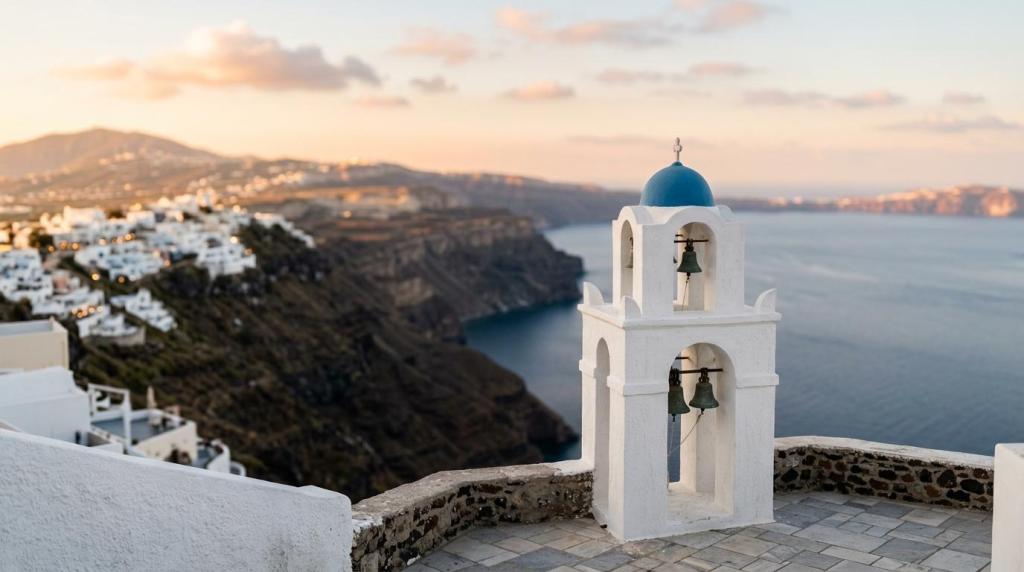
For most first-time visitors, Santorini is the stronger single-island choice than Mykonos. Santorini has the caldera, the volcanic setting, and one of the most distinctive landscapes in Greece.
According to Visit Greece, Santorini was shaped by intensive volcanic activity, and its famous crater-like caldera came from repeated eruptions. That geological story is part of what makes the island feel so singular. If you want iconic views, romance, and dramatic setting, Santorini usually wins.
Mykonos is often the better fit if your priorities are beaches, nightlife, and a busier social scene. That does not make it the better first-island choice for everyone. If this is your only island and you want the image many people associate with Greece, Santorini usually gives the stronger first impression.
If you have time for both, pair them for contrast. If you only have time for one, ask what you want to remember most: the caldera, or the beach-club atmosphere.
Athens, Delphi, and Meteora are high-value first-time stops because each one represents a different layer of Greece. Athens gives classical monumentality, Delphi gives sacred history, and Meteora gives landscape and monastic drama.
UNESCO describes the Acropolis of Athens as the most striking and complete ancient Greek monumental complex still existing today. Its key monuments include the Parthenon, the Erechtheion, the Propylaea, and the temple of Athena Nike. That is why Athens should not be reduced to a one-night arrival city.
Delphi adds something different. UNESCO identifies it as the pan-Hellenic sanctuary where the oracle of Apollo spoke and the site of the omphalos, the “navel of the world.” Set between the Phaidriades on Mount Parnassus, it gives both meaning and setting in one stop.
Meteora changes the visual language of the trip again. UNESCO describes its monasteries as built among almost inaccessible sandstone peaks, with 24 monasteries established there during the 15th-century revival of hermitic monasticism. Only four still house religious communities today. If your itinerary needs one mainland stop that feels almost impossible to confuse with anywhere else, Meteora is a very strong choice.
Families and small groups should customize a Greece route around pace, interests, and hotel-change tolerance. Athens and Santorini may stay on the plan, but the number of stops should reflect the group’s energy.
Step 1 is to decide how the group actually travels. Mixed-age families, friend groups, and multi-generational travellers often do better with fewer base changes than they first expect. Three-night clusters usually feel better than one-night hops. As Aerocoope notes in its guide to planning group transport in Portugal, mid-journey transfers and airport hops absorb far more of a day than most itineraries assume, which is why consolidating bases often makes the whole trip work better.
Step 2 is to match destinations to the group’s priorities. If history leads, move Delphi and Athens higher. If scenery and downtime lead, keep Santorini and perhaps one calmer island. If the group wants variety, combine mainland and islands rather than stacking similar island stops.
“Greek Escapes has provided personalized Greece travel service since 1982, with a Toronto office and English-speaking support in Athens.”
Step 3 is to add private touring only where it improves the experience. A guided Acropolis visit, a full-day Delphi tour, or a tailored mainland circuit can add clarity and reduce friction without turning the whole trip into a rigid schedule.
The best time for a first Greece itinerary is usually April to June or September to early October. Athens, Delphi, and Santorini are all easier to enjoy when temperatures and crowd levels are more moderate.
Shoulder season often gives the best balance of weather, touring comfort, and transport availability. Mainland sites are more pleasant to walk, and island time still feels rewarding.
A practical planning guide looks like this:
Pro tip: if you want both mainland and islands on one first trip, shoulder months are usually the easiest time to make that mix feel comfortable.
First-time visitors should avoid overstuffed routes, one-night stops, and poor geography choices. Athens and Delphi deserve time, and Santorini should not be squeezed into a rushed end cap.
Most itinerary mistakes come from treating travel time as free time. It is not. Greece rewards pacing.
A few errors show up repeatedly:
If then logic helps here, use this rule: if a stop is meant to be memorable, give it time; if it is only there to “fit more in,” it usually belongs off the itinerary.